
Vehicle lettering in Massachusetts does two jobs at once: it advertises your business every time a truck or van leaves the yard, and for many commercial vehicles it is also a legal requirement. If your company runs pickups, box trucks, service vans or shuttles anywhere from Boston to the South Shore, the letters on the door are not just decoration. They are how customers remember your phone number and how inspectors confirm who operates the vehicle.
This guide explains, in plain language, which marking rules apply to commercial vehicles, how to design truck lettering that people can actually read at highway speed, and when it makes more sense to step up from simple vehicle lettering to partial or full graphics. It is written for owners and fleet managers who want a clear answer before they call a sign shop.
Quick note: this article summarizes public regulations for planning purposes. It is not legal advice. Always confirm your specific obligations with the Federal Motor Carrier Safety Administration (FMCSA) or the Massachusetts RMV.
Table of Contents
What Vehicle Lettering Is (and How It Differs from a Wrap)
Vehicle lettering is cut vinyl text and simple graphics applied directly to the paint of a vehicle. A plotter cuts each letter from a sheet of colored vinyl, the excess is weeded away, and the installer transfers the finished layout onto the door, tailgate or box. Typical content includes the company name, logo, phone number, website, license numbers and, when required, the USDOT number.
A vehicle wrap is different. A wrap is a large printed film that covers most or all of a painted surface, so it can carry photos, gradients and full-color branding. Lettering is the leaner option: fewer materials, faster installation and a cleaner look on a vehicle whose paint color already works with your brand.
- Vehicle lettering: cut vinyl letters and logos, one or more solid colors, applied to the existing paint.
- Spot graphics: lettering plus a printed logo panel or decal on doors or rear doors.
- Partial wrap: printed film on part of the vehicle (for example, the back half of a van) combined with lettering.
- Full wrap: printed film over nearly every painted surface; see our vehicle wrap services for that option.
USDOT Marking Rules for Vehicle Lettering in Massachusetts
The federal marking rule is 49 CFR 390.21. For self-propelled commercial motor vehicles it requires two pieces of information: the legal name or a single trade name of the motor carrier, and the USDOT number shown as the letters “USDOT” followed by the number. The regulation also sets how that marking must look.
- It must appear on both sides of the vehicle.
- The letters must contrast sharply in color with the background.
- It must be readily legible during daylight hours from 50 feet while the vehicle is stationary.
- It must be kept and maintained so it stays legible.
Massachusetts extends the USDOT requirement to vehicles that never leave the state. Under the Registry of Motor Vehicles regulation 540 CMR 2.22, effective September 1, 2018, vehicles engaged in intrastate commerce with a gross vehicle weight rating or gross combination weight rating of 10,001 pounds or more, vehicles transporting placarded quantities of hazardous materials, and vehicles designed to carry more than 15 passengers including the driver must be permanently marked with a USDOT number in a manner that conforms to 49 CFR 390.21. The state explains the change in its regulatory bulletin on intrastate USDOT numbers.
In practice, that means many contractors, landscapers, movers and delivery companies running heavy-duty pickups, box trucks and stake bodies need compliant truck lettering even if all their work stays inside Massachusetts. If you are not sure whether a vehicle qualifies, the FMCSA offers an online check on its Do I need a USDOT number? page.
How to know if your vehicle is over 10,000 pounds
Look at the manufacturer label on the driver-side door jamb. The gross vehicle weight rating (GVWR) printed there is the number that matters, not what the truck weighs empty. Many three-quarter-ton and one-ton pickups, cargo vans with heavy upfits, and most box trucks land at or above 10,001 pounds, especially when you factor in a trailer for the combination rating.
7 Essential Rules for Compliant, Readable Truck Lettering
Compliance and marketing work together. The same choices that help an inspector read your USDOT number from 50 feet also help a driver read your phone number at a stoplight. These seven rules guide every vehicle lettering in Massachusetts project we plan.
1. Mark both sides, then add the rear
Regulations call for both sides. Marketing calls for the rear too, because the back of a vehicle is what drivers stare at in traffic. A simple rear layout with your name, phone number and website often generates more calls than the doors.
2. Choose contrast before color
White letters on a dark blue truck, or black letters on a white van, read clearly in rain, glare and dusk. Low-contrast pairs such as silver on white or red on black disappear at a distance. If your brand color is light, use a contrasting outline or a solid backing panel.
3. Size the letters for 50 feet, not 5
Designs that look fine on a laptop screen often turn out too small on a vehicle. Mock up the layout at full scale, step back across the parking lot and check it. Bold, simple, sans-serif typefaces hold up best; thin scripts and condensed fonts do not.
4. Use the exact legal or trade name on file
The name on the vehicle should match the name registered with FMCSA. If your marketing name is different from your legal entity, confirm which one is on your USDOT record before you print anything.
5. Keep a clear hierarchy of information
Lead with what you do and how to reach you. A strong layout usually follows this order: brand or logo, a short service line (“Plumbing and Heating”), phone number, website, and regulatory numbers in a smaller but still legible size.
6. Avoid body lines, handles and seams
Door handles, deep body lines and panel gaps can split letters and make text unreadable. A good installer measures every vehicle model and moves the layout to the flattest available area.
7. Maintain it so it stays legible
The federal rule requires markings to stay legible, so a peeling or faded USDOT number is a problem. Hand-wash when possible, avoid aiming pressure washers at edges, and replace damaged letters quickly. Our vehicle wrap maintenance guide covers care routines that also apply to lettering.
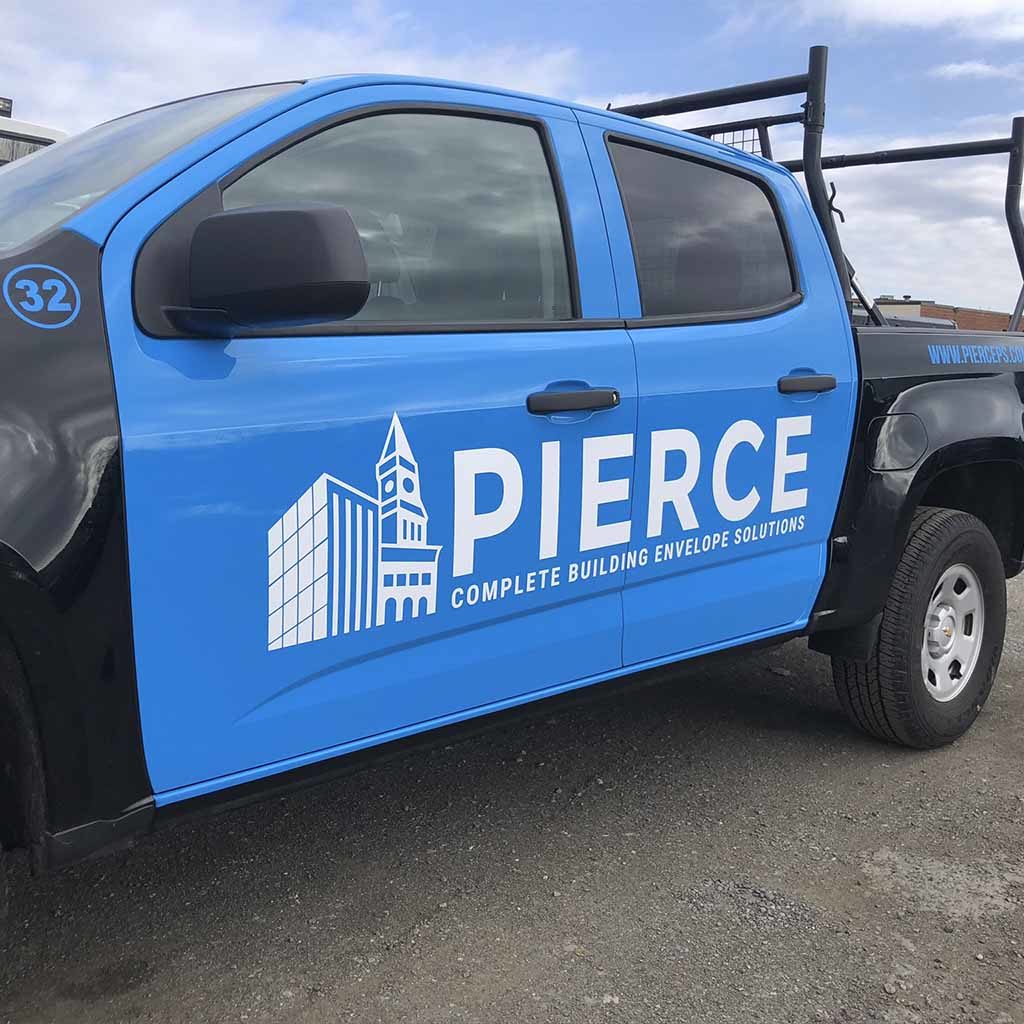
Design Tips That Make Vehicle Lettering Sell
Compliance is the minimum. The real return on vehicle lettering comes from how easy it is for a potential customer to remember you. A few design habits make a measurable difference in how often people call.
- One phone number, one website. Listing three numbers forces drivers to choose and they usually remember none.
- Say what you do in four words or less. “Roofing and Gutters” beats a long list of services.
- Make the website short. If the domain is long, consider a shorter one that forwards to your main site.
- Repeat your logo colors. Consistent colors across vehicles, uniforms and signs build recognition in your service area.
- Use the rear doors for a call to action. “Call for a free estimate” with the number is simple and effective.
If you are planning a new look, our team can prepare a visual proof first. You can also explore how lettering fits into a larger identity on our brand design and concept page.
Vehicle Lettering in Massachusetts by Vehicle Type
Every vehicle has different flat areas, door shapes and viewing angles, so the layout should be planned around the vehicle rather than copied from another one. Here is how we approach vehicle lettering in Massachusetts for the vehicles we see most often.
Pickup trucks
Doors are the main canvas on a pickup. Keep the company name and phone number on the front doors, and place regulatory numbers where they remain visible when the doors are closed. The tailgate is ideal for a short call to action and your website. Toolboxes and racks can hide lower text, so measure with the equipment installed.
Cargo and service vans
Vans offer large, flat side panels, which makes them perfect for bigger text and simple service lists. Sliding doors and their tracks need careful placement so letters do not wear at the seam. Rear doors are high-visibility in traffic and deserve your phone number in large type.
Box trucks and stake bodies
Box trucks are rolling billboards. Cut lettering works well on the cab doors for compliance, while the box often benefits from printed graphics because of its size. Riveted or corrugated surfaces require the right film and installation technique to stay tight.
Shuttles and passenger vans
Vehicles designed to carry more than 15 passengers including the driver fall under the Massachusetts USDOT marking rule for intrastate commerce. Window areas are limited, so plan lettering on the body panels and consider perforated window film for rear windows if you also want graphics there.
Choosing Materials for Long-Lasting Truck Lettering
New England weather is hard on vinyl. Winter road salt, summer UV and frequent washing all test the film and its adhesive. Material choice is one of the biggest factors in how long vehicle lettering looks new.
- Cast vinyl is thinner and more dimensionally stable, which helps on curves, rivets and long-term outdoor use.
- Calendered vinyl is a cost-effective option for flat surfaces and shorter-term applications.
- Reflective vinyl can improve nighttime visibility for regulatory numbers and safety markings.
- Overlaminate protects printed logo panels from scratches and fading; cut solid-color letters usually do not need it.
Ask your installer which film line they use and what the manufacturer rates it for. Reputable manufacturers publish expected performance data for their films, and that information is far more useful than a generic promise. Good vehicle lettering in Massachusetts should survive several winters without lifting when it is installed and maintained correctly.
What affects the investment
Instead of a one-size price, the cost of truck lettering depends on the number of vehicles, the amount of text, how many colors are layered, whether printed logos are included, the film quality and how much surface preparation is needed. Removing old lettering adds time. Getting several vehicles done at once usually improves efficiency because the design work is shared.
Vehicle Lettering vs. a Full Wrap: Which Is Right for You?
Both options can be excellent. The right choice depends on the vehicle, your budget, how long you plan to keep it and how much attention you want it to attract.
| Factor | Vehicle lettering | Partial or full wrap |
|---|---|---|
| Look | Clean, professional, solid colors | Full-color, photographic, high impact |
| Investment | Lower | Higher |
| Installation time | Usually shorter | Longer, often a full day or more |
| Paint protection | Only under the letters | Covers and helps protect most panels |
| Best for | Work trucks, compliance-driven fleets, tight budgets | Brand awareness, consumer-facing services, mobile advertising |
Many fleets combine both: compliant truck lettering on work trucks and full wraps on the vans that visit customers. If you are comparing durability, our article on vehicle wrap lifespan explains what affects how long printed film lasts.
How MSC Handles Vehicle Lettering in Massachusetts
Our process is designed to get your vehicle back on the road quickly with lettering that is accurate and readable.
- Consultation. We confirm the vehicle model, your brand assets and any regulatory numbers you need to display.
- Measurement and design. We measure the panels, build the layout to scale and send a digital proof for approval.
- Production. We cut the lettering from quality vinyl in your approved colors.
- Preparation and installation. The surface is cleaned and prepared, then the lettering is installed and checked for alignment.
- Final review. We walk around the vehicle with you so you can see it from a distance before it leaves.
For multi-vehicle projects, we standardize templates so every truck matches. See how we roll that out on our fleet graphics installation page.
Common Truck Lettering Mistakes to Avoid
- Printing a USDOT number that is too small or too low to read from 50 feet.
- Using a marketing name that does not match the carrier name on file.
- Placing text across a door handle or deep body crease.
- Choosing brand colors that do not contrast with the paint.
- Forgetting to update lettering after a phone number, address or ownership change.
- Letting damaged letters stay on the vehicle for months.
Avoiding these mistakes protects you from roadside issues and keeps your vehicle lettering working as advertising every day. If you have questions about older layouts, our earlier post on whether your vehicle needs a label is a helpful starting point.
Vehicle Lettering in Massachusetts: Frequently Asked Questions
Does Massachusetts require a USDOT number on trucks that only operate in-state?
Yes, for many vehicles. Under 540 CMR 2.22, effective September 1, 2018, intrastate vehicles with a GVWR or GCWR of 10,001 pounds or more, vehicles carrying placarded hazardous materials, and vehicles designed to carry more than 15 passengers including the driver must display a USDOT number that conforms to 49 CFR 390.21.
What information must appear on a commercial vehicle?
For vehicles subject to 49 CFR 390.21, the marking must show the legal name or a single trade name of the motor carrier and the USDOT number preceded by the letters USDOT, on both sides of the vehicle.
How big should USDOT lettering be?
The federal rule does not set a fixed letter height. It requires the marking to contrast sharply with the background and be readily legible during daylight from 50 feet while the vehicle is stationary. Test the layout at full scale from that distance.
Can I use magnetic signs instead of vinyl vehicle lettering?
Massachusetts requires the USDOT number to be permanently marked on vehicles covered by 540 CMR 2.22, so cut vinyl lettering is the more reliable choice for those vehicles. Magnets can still work for supplemental marketing messages.
Is vehicle lettering cheaper than a wrap?
In most cases, yes. Lettering uses less material and takes less installation time than a partial or full wrap, which is why it is popular for work trucks and compliance-focused fleets.
How long does vehicle lettering last in New England weather?
It depends on the film, the installation and the care. Quality cast vinyl installed on properly prepared paint and washed gently can last for years. Road salt, harsh pressure washing and constant sun exposure shorten that life, so regular inspection is important.
Ready to letter your truck or van?
MSC Branding Services designs and installs vehicle lettering in Massachusetts for contractors, service companies and fleets across Everett and Greater Boston. Call us at (617) 203-2060 or request a free quote and we will help you build a layout that looks sharp and keeps your trucks compliant.