
The right bus wrap material is the difference between a wrap that still looks sharp after years of service and one that lifts, cracks or fades long before its time. Buses are big, flat in some places and heavily riveted or curved in others. They run long hours, go through frequent washes and spend New England winters in salt and slush. Every one of those conditions puts stress on the film.
This guide explains the main materials used in a professional bus wrap, from the printable vinyl to the window film and protective laminate, and shows how to choose the right combination for shuttles, private coaches and transit-style buses. It is written for fleet managers, operators and marketing teams who want to understand what they are buying before they approve a proposal.
Table of Contents
What Makes Up a Bus Wrap?
A bus wrap is a system of layers rather than a single sticker. Each layer has a job.
- Print film: the base vinyl that carries the printed design and the adhesive that bonds it to the bus.
- Overlaminate: a clear protective film applied over the print to resist scratches, UV and cleaning chemicals.
- Perforated window film: a printed film with tiny holes that lets passengers see out while the outside shows your graphic.
- Edge sealing and finishing: techniques and products that keep edges and seams secure where needed.
Getting each layer right, and making sure they are designed to work together, is what makes bus wrap material choice so important. Most manufacturers sell matched systems of film and laminate for this reason.
Why does this matter so much on a bus? A bus wrap covers a very large surface, so any weakness in the material shows up everywhere at once. A film that shrinks slightly will open gaps at every seam, a laminate that yellows will dull the entire design, and an adhesive that lets go around rivets will create dozens of small failures down each side. Because a single bus can carry many square feet of graphics, the cost of redoing a failed wrap is high. Choosing proven, matched materials up front is the most reliable way to protect that investment and keep the vehicle looking professional on every route.
Cast vs. Calendered Vinyl: The Core Bus Wrap Material Decision
Vinyl print films come in two main families, and the difference matters a lot on a bus.
| Property | Cast vinyl | Calendered vinyl |
|---|---|---|
| How it is made | Liquid vinyl cast into a thin sheet with little internal stress | Vinyl pressed and stretched through rollers |
| Conformability | Excellent over rivets, curves and recesses | Best on flat or simple curves |
| Dimensional stability | High; resists shrinking | More prone to shrink over time |
| Typical use | Full wraps, long-term fleet and bus graphics | Flat panels, short-term or budget applications |
| Investment | Higher | Lower |
For a full or partial bus wrap that needs to last, cast vinyl is the standard recommendation. A well-known example is 3M Controltac Graphic Film IJ180Cv3, a cast film that 3M lists for vehicles, trucks and bus graphics. Calendered films still have a place on flat side panels and shorter promotions where conformability is less critical.
Adhesive Features That Matter on a Bus
The adhesive is half of the material decision. Modern wrap film includes features that make installation cleaner and the result more reliable.
- Air-release channels: tiny channels in the adhesive let trapped air escape, reducing bubbles on large panels.
- Repositionability and slide: the installer can position large panels accurately before pressure activates the bond.
- Removability: quality films are designed to be removed with heat within a stated period, which protects the paint when the wrap is replaced.
- Low-surface-energy options: some films are formulated for difficult surfaces, such as certain plastics.
Ask your installer which film line they plan to use, and why it suits your bus body and the expected life of the campaign.
Perforated Window Film for Bus Windows
Bus windows offer a lot of advertising space, but passengers still need to see out. Perforated window film solves that. It is printed on the outside and has a pattern of small holes so riders can see through from inside, where it is darker.
- Perforation ratio: common patterns include 50/50 and 60/40, describing the balance between printed material and open holes. A higher open area improves visibility from inside; more material improves the image outside.
- Laminate: an optically clear laminate protects the print and helps keep dirt and water out of the holes.
- Edge sealing: manufacturers such as 3M state in their graphics catalog that edge sealing is required for perforated window graphics to be warranted.
- Safety and rules: keep the driver windows and any windows required for safe operation clear, and confirm any operator or local requirements before covering windows.
Overlaminates: Protecting Your Bus Wrap
An overlaminate is the clear shield over the printed design. On a bus, which is washed often and exposed to road debris, it is essential.
- Gloss laminates make colors look rich and are easy to clean.
- Luster or satin laminates reduce glare while keeping colors vivid.
- Matte laminates give a modern, low-reflection finish but can show dirt more easily.
- Specialty laminates offer added scratch or graffiti resistance for high-risk routes.
The laminate should come from the same system as the print film. Mixing incompatible materials can cause shrinking, tunneling or warranty problems.
Bus Wrap Formats and How They Affect Material Needs
The format of the wrap determines how much of each bus wrap material you need and where.
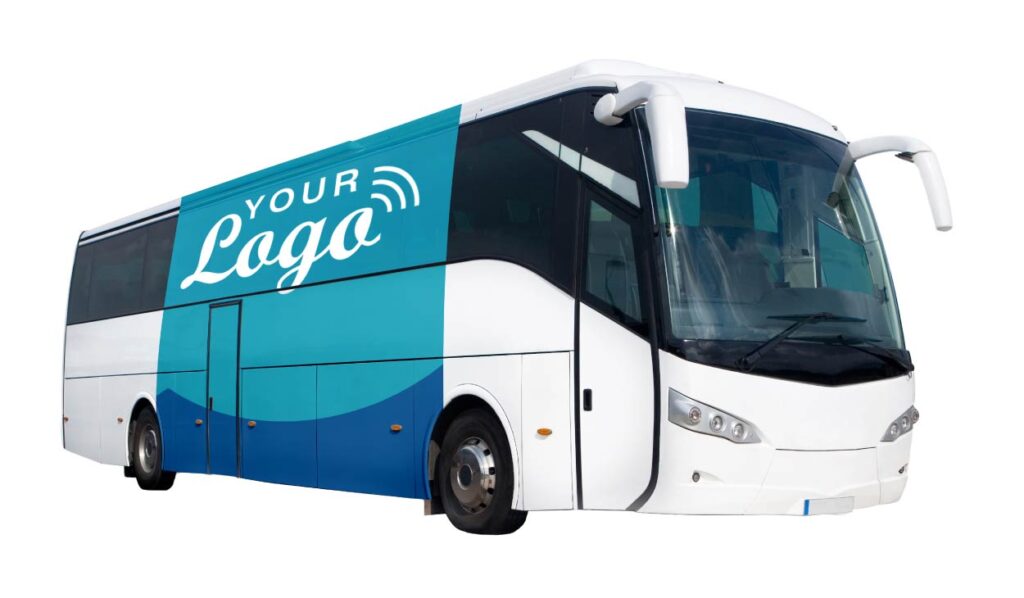
- Full wrap: covers the body and usually the windows, using cast vinyl on panels and perforated film on glass.
- Half wrap: covers part of the bus, often the rear half or lower sections.
- King Kong and Queen Kong: large formats on the street side and curb side of the bus, sized around the windows and doors.
- Ribbon and partial ribbon: a horizontal band of graphics along the side, an efficient option for branding.
- Rear and spot graphics: smaller placements focused on the back of the bus, which is seen by drivers in traffic.
You can see examples of these formats on our bus wrap page and plan the right coverage with our team.
The format also affects budget and downtime. Larger coverage means more bus wrap material, more printing and longer installation, while ribbons and rear graphics can be produced and installed quickly. Many operators start with a smaller format on several buses and expand coverage on the vehicles that run the most visible routes.
How Long Does Bus Wrap Material Last?
There is no single answer, because durability depends on the film, the laminate, the print process, how the bus is used and how it is cared for. Manufacturers publish expected performance life for their wrap film, but those figures are usually based on specific test conditions, such as unprinted film on a flat, vertical outdoor surface. Printed graphics, horizontal surfaces like roofs and hoods, and harsh climates typically shorten real-world life.
- Vertical vs. horizontal: sides last longer than roofs and front caps, which receive more sun and debris.
- Print and laminate quality: properly cured inks and a matched laminate protect color.
- Washing method: frequent brush washes and aggressive chemicals wear film faster.
- Climate: road salt, freeze-thaw cycles and summer heat in Massachusetts all add stress.
Our article on vehicle wrap lifespan goes deeper into the factors that shorten or extend the life of a wrap.
Design Considerations for Bus Graphics
Good design accounts for the bus itself, not just the artwork. A layout that looks perfect on a flat template can lose its message when doors, windows and body seams are added.
- Avoid key text over doors and seams: names, phone numbers and logos should sit on uninterrupted panels.
- Respect required markings: buses designed to carry more than 15 passengers including the driver may need a USDOT number and carrier name; plan space for them in the layout.
- Keep safety items visible: emergency exits, lights, reflectors and operating labels must stay uncovered and readable.
- Design for each side: the street side, curb side and rear are seen by different audiences and in different ways.
- Use bold, simple messages: like any moving ad, a bus is often seen for only a few seconds.
If you are wrapping several buses, standard templates for each model keep every unit identical. Our guide to fleet graphics management explains how to set that up.
Installation: Where Bus Wrap Material Succeeds or Fails
Even premium film will fail if the installation is rushed. Professional installers follow the manufacturer instructions for surface preparation and application.
- Inspection: the body is checked for damaged paint, rust or previous graphics that must be removed.
- Cleaning and preparation: surfaces are washed and cleaned to remove wax, oils and contaminants that interfere with adhesion.
- Controlled environment: installing indoors at appropriate temperatures helps the adhesive bond correctly, which matters during Massachusetts winters.
- Application: panels are aligned, applied and worked into rivets and recesses using the right tools and heat.
- Post-heating and finishing: stretched areas are post-heated as specified, and edges are trimmed and sealed where needed.
Ask whether the installer is trained or certified on the film they use, and what workmanship warranty they provide in addition to the material warranty.
Caring for a Bus Wrap
- Hand-wash or use touchless washes when possible.
- Use mild, non-abrasive cleaners recommended for vehicle graphics.
- Keep pressure washer nozzles at a safe distance and never aim at edges or seams.
- Remove fuel spills, bird droppings and tree sap promptly.
- Inspect edges and windows regularly and report lifting early.
Driver habits make a real difference. Sharing a simple care sheet, like our vehicle wrap maintenance guide, helps the bus wrap material reach its full potential.
Removal and Replacement
Buses often change advertising or branding before the vehicle is retired. Quality removable wrap film is designed to come off with heat within the manufacturer stated removal window, leaving the original paint in good condition. Waiting too long, or using films not designed for removal, can make the job slower and increase the risk of adhesive residue.
Plan removal and reinstallation together to minimize downtime. Installing the new graphics immediately after removal keeps the bus out of service for the shortest possible time.
Specialty Wrap Film Options for Buses
Beyond standard printable vinyl, several specialty materials can add visibility or solve specific challenges on a bus.
- Reflective films: reflect light from headlights at night, improving visibility for logos, stripes and safety markings.
- Transit-specific films: some manufacturers offer films designed for shorter transit advertising cycles with easy removal in mind.
- Clear and window graphic films: used for interior messages or windows where perforated film is not appropriate.
- Anti-graffiti laminates: help make vandalism easier to clean on vehicles parked in exposed areas.
- Color change films: solid colors without printing, useful for base colors combined with printed logos.
Each specialty wrap film has its own installation and care requirements, so it should be specified as part of the full system rather than added at the last minute.
Choosing Bus Wrap Material by Vehicle Type
Shuttle buses
Hotel, airport, medical and campus shuttles have smaller bodies with many curves around the front cap and wheel wells. Cast vinyl is especially important here because of the compound curves, and perforated film is common on passenger windows.
Motorcoaches
Coaches offer long, smooth side panels with large windows and luggage bay doors. Designers must account for the bay door seams, and premium cast film with a durable laminate suits the long highway miles these vehicles travel.
Transit-style buses
Transit-style buses often carry advertising for defined campaign periods. Material choice balances durability with easy removal at the end of each campaign, and large formats such as King Kong layouts are common.
Not sure which bus wrap material fits your vehicles? Our team can review the bus model, its routes and your timeline before recommending a system, and if you want to turn the bus into a dedicated advertising platform, explore our mass mobile advertising service.
Bus Wrap Material Checklist Before You Approve a Quote
- Which cast or calendered print film will be used, and why?
- Which matching overlaminate and finish are included?
- What perforated film and ratio will cover the windows?
- How will edges, seams and perforated graphics be sealed?
- Are required markings and safety items accounted for in the design?
- What material warranty and workmanship warranty apply?
- How will removal be handled when the wrap is replaced?
A clear answer to each question shows that the provider has selected the bus wrap material carefully rather than defaulting to whatever is in stock.
Bus Wrap Material FAQs
What is the best bus wrap material?
For long-term full or partial wraps, cast vinyl with a matching overlaminate is the standard choice because it conforms to rivets and curves and resists shrinking. Perforated window film is used on the windows.
Can you wrap bus windows?
Yes, using perforated window film that shows the graphic outside while allowing passengers to see out. Driver and safety-critical windows should stay clear, and edges should be sealed as the manufacturer requires.
What is the difference between cast and calendered vinyl?
Cast vinyl is made as a thin, low-stress sheet that conforms to complex shapes and stays dimensionally stable. Calendered vinyl is pressed and stretched, costs less and works best on flat surfaces or shorter-term graphics.
Why does a bus wrap need a laminate?
The overlaminate protects the printed design from scratches, UV exposure, washing and chemicals, which helps the wrap keep its color and finish longer.
What is a King Kong bus wrap?
It is a large-format advertising layout that covers most of the side of a bus around its windows and doors. A Queen Kong is a similar large layout on the opposite side.
How should I clean a wrapped bus?
Use hand washing or touchless washes with mild cleaners, keep pressure washers at a safe distance from edges and remove contaminants like fuel and sap quickly.
Is perforated window film safe for passengers?
When applied to permitted windows, perforated film lets passengers see out while showing the graphic outside. Driver windows and windows needed for safe operation should remain clear, and operators should confirm any applicable rules.
Plan your next bus wrap
MSC Branding Services designs and installs bus and shuttle wraps for operators and businesses across Everett and Greater Boston. Call (617) 203-2060 or request a quote and we will recommend the right bus wrap material for your vehicles and your goals.